Lead Generation for Software Development Companies: Full AI Workflow for New Product Launch
Want to grow your sales pipeline as an IT service provider? Learn how you can automate lead generation for software development companies using AI in our stepwise guide.
Cleverviral
·
December 30, 2024
·
12 min
Generating high-quality software development project leads can feel like navigating a labyrinth. With an ever-evolving market, increased competition, and the need for hyper-targeted outreach – lead generation for software development companies often proves to be a significant challenge.
That’s where cold email & automation can be pivotal. With cold email marketing generating ROI upwards of 4400% compared to other channels, it's critical to leverage it to stack your sales pipeline with more high-quality leads.
This detailed guide explores how you can automate lead generation for software development agencies using tools like Clay and UnifyGTM. In addition, we’ll also explore the challenges and best practices required to make the most out of your lead generation efforts.
So what are you waiting for? Let’s get started.
What Is Software Development Lead Generation?
At its core, software development lead gen is the process of identifying, attracting, and nurturing potential clients who may require your software development services. It involves creating interest in your offerings, building trust, and guiding prospects through the sales funnel.
The most successful strategies to streamline lead generation for software development projects use a combination of channels including:
Cold email for IT services: Personalized, highly-targeted outreach to decision-makers in specific industries.
Cold calling: Direct phone calls to establish rapport and pitch services.
Social prospecting: Leveraging platforms like LinkedIn to connect with prospects.
With multichannel outreach bumping lead engagement rates by a whopping 300%, combining these approaches ensures that your pipeline is constantly filled with high-quality, interested prospects.
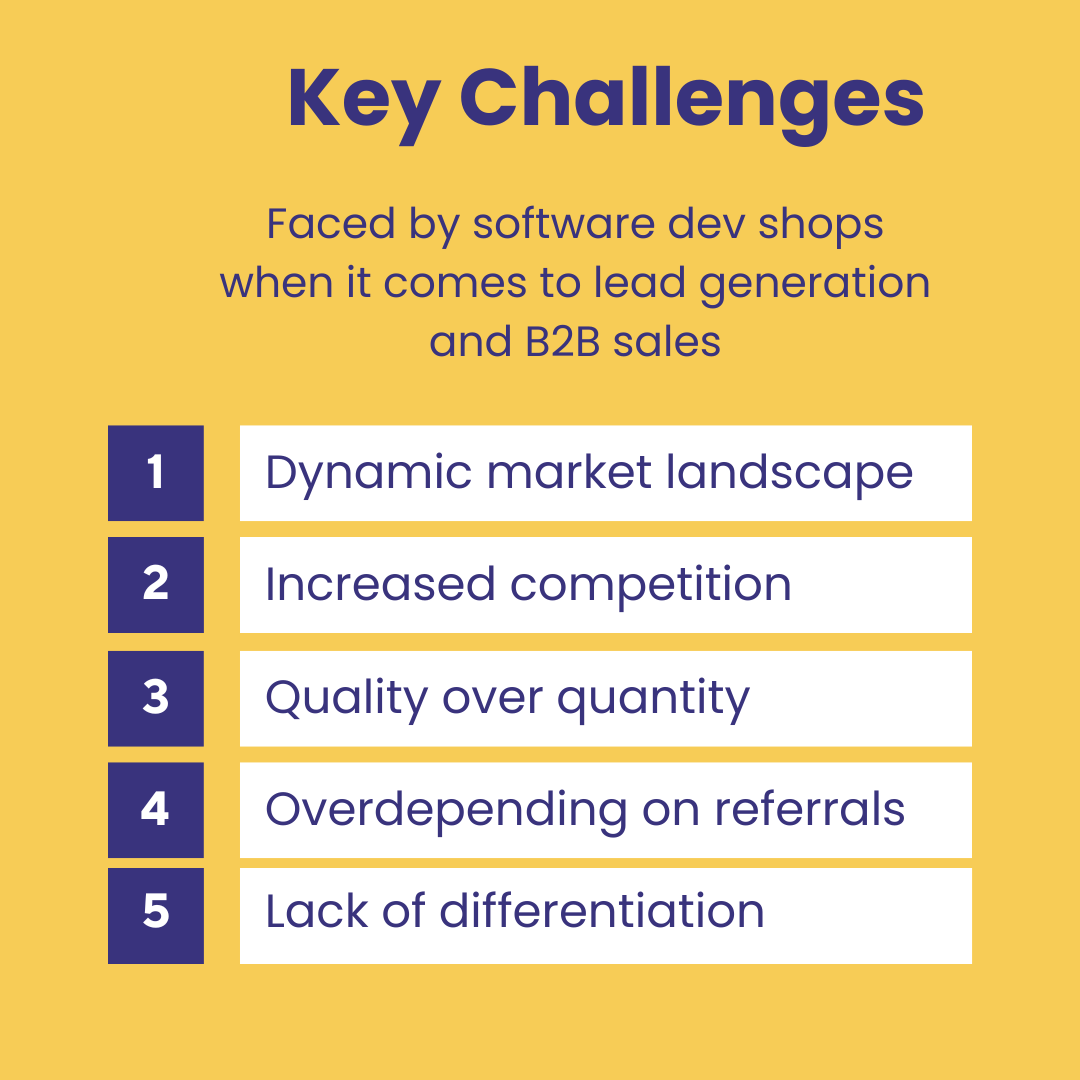
Key Challenges in Lead Generation for Software Development Companies
The world of lead generation for software development agencies comes with some unique hurdles. Having spent significant time generating leads for IT service providers, we’ve uncovered some unique challenges about the industry:
1. Dynamic market landscape
When it comes to lead generation for software development, a key challenge is the highly dynamic nature of the industry. The tech industry evolves rapidly, with new technologies and trends (such as Gen AI, automation, 5G technology and spatial computing) emerging every year.
To ensure consistent lead generation for software development, companies need to stay ahead of the curve and affirm their relevance in a highly dynamic environment.
By doing so, they can ensure being aligned with what customers want – and how they can position their offering to match those requirements.
2. Increased level of competition
Another key challenge around consistent lead generation for software development is the high level of competition in the market. There are tons of IT service providers vying for the customer’s attention, and with a CAGR of 11.5% over the next 5 years – you need to create a point of differentiation in the market.
Even before you think about generating software development project leads, you need to craft an enticing offer that positions you as the #1 technology partner for new-age tech brands.
3. Quality Over Quantity
Another key challenge around effective lead generation for software development is ensuring the quality of leads. As a business, it doesn’t make sense to prospect leads who will either:
Not be the right fit for your ICP
Or won’t have the budget required to bring about the digital transformation.
Custom dev shops often fall in the trap of prioritizing volume over the quality of leads. That’s where automating processes like ICP alignment, sales trigger analysis and personalization ensures your efforts target high-value prospects.
4. Over-dependence on referrals
Over-dependence on referrals as a key method of lead generation for software development agencies is another challenge. A lot of IT service providers depend heavily on “word-of-mouth”, an approach that lacks scalability and predictability.
Rather than creating opportunities yourself, you’re relying on external forces to fill your sales pipeline. That’s where automation and adopting new lead generation strategies can help you scale further.
5. Lack of differentiation
Without a unique selling proposition (USP), agencies struggle to stand out in a crowded market – which eventually impacts their lead generation efforts. When it comes to effective lead generation for software development shops, two companies offering “custom software development” may appear identical to a prospect.
That’s where differentiation and positioning comes into play. As a salesperson, personalizing your outreach while highlighting your unique offer can make a significant difference.
How to Automate Lead Generation for Software Development Agencies?- Stepwise AI Workflow
When it comes to lead generation for software development companies, automation can be a game-changer. By leveraging AI tools like Clay and UnifyGTM, you can personalize your outreach by identifying sales triggers and streamlining processes to improve results.
Given below, is a stepwise workflow on how you can automate your software development lead gen process with AI:
Step 1: Identify sales triggers
The first step for automating lead generation for software development agencies is to identify the sales trigger to personalize your outreach. In simple terms, sales triggers are events that indicate a company may need your services. These trigger events are then utilized alongside data enrichment tools like Clay to enhance the quality of your email.
For this particular workflow, we’ll focus on identifying companies that have had recent product releases once you’ve had a list of accounts (or prospects) you want to reach out to.
We’ll be using the Claygent scraper to scrape the company websites for product launch announcements. To do so, we’ll be running the following prompt:
“Scrape the website given under the “Website” column to find the latest product or feature launch for a company given under the “Company” column. If found, output the name of the new product or feature released. In case you’re unable to find any new product or feature releases, return “None Found” as output.”
Step 2: Filter & segment the data
The next step to automate lead generation for software development is to filter and segment the data. Now that you’ve run the Claygent prompt, you’ll get a column with the output in case a company has launched a new product or feature.
You can apply filters and segment the list, finalizing accounts or prospects from companies with a new product launch – uploading them to a tool like UnifyGTM to create a new audience that you can prospect for decision-makers at these companies.
Step 3: Generate prospect lists
Creating a list of relevant prospects is the next step to automate lead generation for software development shops. Once you’ve run the prompt to finalize which companies are an ideal fit for your ICP, you can create and execute a “playbook” (a type of workflow) in Unify to automate your list building. While at it, you also need to define the parameters of your outreach, such as targeting companies with a recent product launch.
Next up, you need to input the titles of the ideal customer persona you’re looking to target – such as heads of IT, digital transformation directors and CTOs.
Step 4: Personalizing your cold email
The next step for automating lead generation for software development companies requires you to personalize your message. We’ll be using AI to craft a hyper-personalized email referencing the company’s recent product launch.
An example of a potential email you can send would go something like this:
“Hi {{first_name}},
Congrats on the recent launch of an automated double parking system with AI for {{company_name}}. Given that, I’m curious about how you’re planning to scale things up on the tech front?”
Once the first few personalized lines have been generated, you can add your offer and a subtle, non-pushy CTA to wind up your email. After the personalization has been run through your list, simply download the prospect list as a CSV file.
Step 5: Automate and launch
In the final step for automating cold email for your IT services, you can upload the lead list inside a new campaign on Smartlead. You can create a sequence and then map the variables in Smartlead to launch your campaign.
Alternatively, you can even leverage a tool like UnifyGTM to automate the email sequences at scale. Having added different variations of your email, you can monitor the open and response rates alongside other metrics to identify what’s working.
Based on the insights gathered, you can then iterate and scale your campaign.
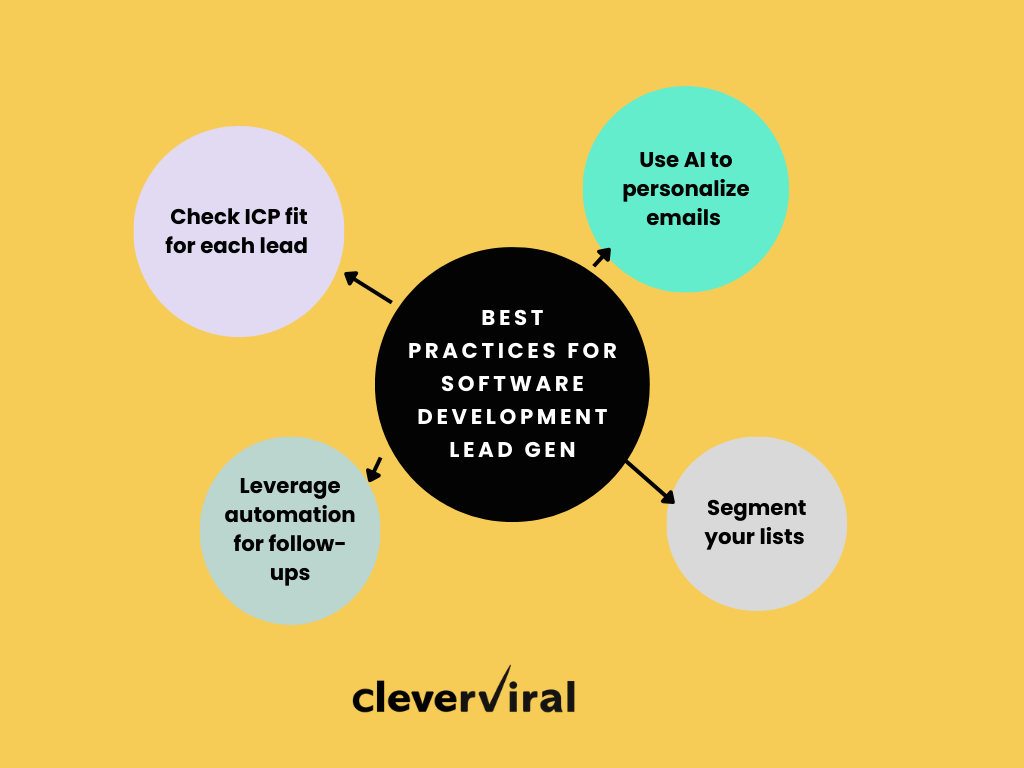
Maximizing the Value of Software Development Lead Gen: Best Practices
Implementing best practices ensures your lead generation for software development efforts yield maximum results. Given below are a few that you need to follow:
To ensure success in lead generation for software development, adopting a structured and strategic approach is crucial. These best practices offer actionable insights into building a high-quality pipeline and optimizing outreach efforts:
1. Check ICP fit for each lead
When looking to scale lead generation for software development shops, sales teams need to focus on leads that align with the company’s ideal customer profile (ICP). Targeting non-ICP leads wastes resources and dilutes your efforts, with companies focused on ICP-aligned leads experiencing a 68% higher conversion rate.
AI tools like Apollo or Clay can automatically match prospects against your ICP. For example, if your ICP focuses on mid-sized e-commerce companies, these tools can filter out leads that don’t meet the criteria, ensuring your team focuses on the most promising opportunities, while also improving the efficiency of your software development lead gen process.
2. Leverage automation for follow-ups
Follow-ups are critical in lead generation for software development, yet many businesses fail to execute them effectively. Now while there’s a common belief that about 70% of sales emails go unanswered, it often boils down to how well you optimize your follow-ups.
As per Saleshandy, automated follow-ups can double your response rate. Prospects often miss or overlook the first email, but a timely reminder ensures your message remains top of mind. Automation tools like Smartlead and UnifyGTM streamline this process, scheduling follow-ups based on specific triggers, such as unopened emails or a lack of response.
Automating follow-ups not only increases your chances of securing a positive response but also frees up valuable time to focus on more strategic tasks, making it an indispensable part of your software development lead gen strategy.
3. Segment your lists
List segmentation is the foundation of an effective cold email for IT services campaign. By dividing your audience into smaller, targeted groups, you can craft messages that resonate with their specific needs.
Segmentation can be done based on various factors:
Industry or niche: Tailor messaging for verticals like fintech, healthcare, or e-commerce.
Company size: Address startups differently from enterprises, as their challenges and needs vary.
Decision-maker role: Send customized messages to CTOs, product managers, or marketing leaders.
For instance, a message to a CTO might highlight technical capabilities, while outreach to a marketing head could focus on improving customer acquisition processes. Through tools like Hubspot or Salesforce – you can easily group and manage prospects, yielding better results while saving both time and resources.
4. Use AI to personalize outreach
Personalization has become a non-negotiable element in successful software development lead gen strategies. AI tools like Clay, Apollo and ChatGPT make it easier to craft tailored messages that resonate with each recipient.
AI analyzes prospect data, such as industry, company size, or recent activities, and crafts hyper-personalized emails. Instead of a generic pitch, you can create targeted messages like:
“Hi [Name], I noticed your company recently expanded into [Market]. Our team has worked with similar organizations to develop tailored software solutions that accelerate growth. Would you be open to discussing how we can support your goals?”
AI-powered personalization tools also save time by automating repetitive tasks. By letting AI craft unique emails based on predefined criteria, you ensure that every prospect feels individually valued, even at scale.
Scale Lead Generation for Software Development Agencies with AI Email Outbound
AI-powered tools like Clay enable software agencies to scale their software development lead gen efforts efficiently. By automating tasks like data scraping, personalization, and outreach, you can secure high-quality software development project leads at scale.
At Cleverviral, we specialize in helping software development companies achieve consistent growth through targeted AI-driven campaigns. If you’re looking to achieve similar results – reach out to us on hi@cleverviral.co or fill out the form on our website.
Until then, happy prospecting!
Frequently Asked Questions
How can I automate lead generation for my software development company?
You can leverage tools like Clay and UnifyGTM to automate lead generation for software companies at scale.
Should I buy software development project leads for my development agency?
Buying software development project leads can be beneficial if done strategically. It saves time on prospecting and gives immediate access to potential clients. However, the quality of purchased leads varies, and many may not align with your Ideal Customer Profile (ICP), leading to wasted resources.
Instead, focus on building a highly-targeted lead list using AI to identify and reach high-quality leads that fit your customer profile.
Free test campaign
Reading about outbound isn't running it. Want us to run yours?
Apply below. If we're a fit, we run a real pilot on your ICP and show you the actual replies before you commit to anything.