How to Develop an Effective B2B SaaS Sales Process? – In Just 11 Steps
An efficient B2B SaaS sales process is the backbone of any startup's sales function. Learn how you create one for yourself using a stepwise approach and relevant examples.
Cleverviral
·
December 29, 2023
·
16 min
Selling Software as a Service (SaaS) presents unique challenges compared to other B2B products and services. Unlike tangible products, SaaS solutions require a commitment to long-term engagement from the customer. As a result, you’ll need to educate the customers about the value delivered by your SaaS product, the expected ROI and how it fits into their existing sales & tech stack – that too, at different stages of the sales cycle.
For new and early-stage founders, developing a competent sales team and process is crucial. SaaS sales involve not just selling a product but educating the prospect about its sustained value over time.
Over the course of this article, you’ll discover how to craft an effective SaaS sales process that’ll not only help you earn more revenue, but also convert more prospects into paying customers.
What is the SaaS Sales Process?
“So, how is SaaS sales different from traditional sales?” – this is one of the most common questions we get from first-time SaaS founders, and with good reason.
A typical SaaS sales cycle lasts about 84 days, and up to 170 days for products with an ACV of more than $100k, necessitating a robust and predictable sales approach to maintain consistent growth. SaaS products, being intangible and subscription-based, require ongoing customer engagement.
The focus of your SaaS sales strategy is not just on getting the initial sale but on building long-term relationships, ensuring customer satisfaction, and encouraging renewals.
Role of Sales Models in A SaaS Sales Process
Given the extensive sales cycle, using the right sales model plays a significant role in any SaaS sales process. It’s important to know each of them in-depth, so as to get more recurring revenue for your SaaS business.
These include:
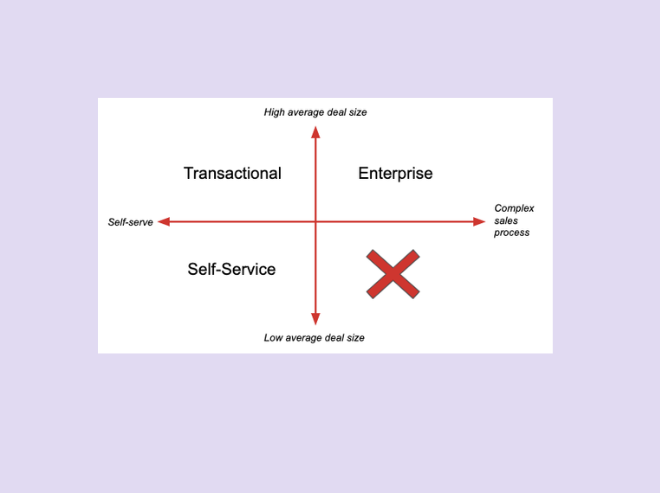
Self-service model: This type of SaaS sales model has no sales reps, and usually relies on a B2B sales process focused on lead generation.
Transactional model: The transactional sales model requires a few sales reps to be available for prospects who are hesitant to pay the price of your product.
Enterprise model: This SaaS sales model requires you to have a dedicated sales team, alongside some outbound marketing & enough capital runway to endure a longer sales cycle.
Let’s dive deeper into each of these SaaS sales models & understand the value each brings to the table.
1. Self-Service model
This SaaS sales model is ideal for low-cost SaaS products, especially those with an easy onboarding process. The customer journey here is primarily digital, with minimal direct sales intervention.
Here, the focus is on driving brand awareness through easily accessible “how-to” content for self-education & troubleshooting. In this model, the SaaS company doesn’t need a full-fledged SaaS sales team but a customer success one.
Companies opting for this sales model also need to invest in a full-fledged lead generation funnel, so as to maximize the number of people who stumble upon your product & are willing to learn more.
Transactional model
Using the transactional model in your SaaS sales process is ideal when these products require a moderate level of customer education and support.
It usually involves a mix of both automated and personalized sales interactions, with a goal to maintain proper balance between efficiency and tailored customer support.
The reason behind this is the reluctance of people to part with a significant amount of their hard-earned money, unless there’s a positive interaction with a sales rep.
Transactional models are more complex, combining content marketing and sales reps working together to nurture the leads for the long-term.
Lead scoring is an essential component of this sales model, since you’re prioritizing leads based on the amount of nurturing they require.
Enterprise model
For high-end SaaS products, the enterprise model demands a highly personalized approach. Sales teams in this model engage in in-depth interactions with prospects, including custom demonstrations and discussions about integration, security, and customization.
This model is suited for products that require significant investment and integration into the customer’s business processes – as a result of which you’ll need a large sales team that can spend time across meetings, demos and training sessions with your target customers.
How to Develop Your SaaS Sales Process? - Step-by-Step Breakdown
Once you’ve figured out the ideal sales model, it’s time to get down & develop a SaaS sales process that brings both product awareness and a higher number of conversions.
Here are some key SaaS sales process steps you need to follow:
1. Understanding Your Audience
Developing an Ideal Customer Profile (ICP) and buyer personas is the first and most crucial step in developing your SaaS sales process. It involves understanding the specific characteristics, challenges, and needs of your target audience – with an objective to shorten the sales cycle.
The ICP details the kind of companies that benefit most from your product, while buyer personas offer insights into the individuals making purchasing decisions within these companies.
The ICP includes details specific to your target market, such as the type of businesses your target audience is employed with, and their annual salary among others. On the other hand, the buyer persona is a fictional representation of the ‘ideal customer’ who matches your product’s needs.
In addition, you’ll also need to choose what channels to use in your SaaS sales process, so as to reach out more effectively to your ideal customer.
2. Choose an appropriate sales model
The choice of a SaaS sales model is pivotal to your SaaS sales process, and should be based on factors such as the product’s complexity, pricing and level of customer education required. But why?
Well, it’s important to choose the right sales model, since it not only informs your approach to trails and demos, but also the way you structure your sales team (both key to a solid SaaS sales process).
Each model, whether self-service, transactional, or enterprise, dictates a different approach to customer interaction and sales strategies.
That being said, the first step is to map out your ICP, and understand the following:
How do these customers source information about your product?
Do they sign up for tailored demos or do they prefer a free trial?
Who is the ideal point of contact to start the sales conversation?
And, how many decision-makers are involved in the SaaS sales process, start to end?
In addition, you’d also want to consider the nature of the product, while answering the following questions:
How complex is your product?
How many features, plans or upgrades do you offer?
What’s the level of one-on-one education required vs. self education via content?
How long does it take to onboard a new user?
Based on the above factors, you can zero-in on which of the 3 sales models works best for you before eventually moving to the next step of your SaaS sales process.
3. Qualify your leads
Once the ICP has been established, and the SaaS model of your choice figured out; the next step is to qualify leads and move them further down the funnel in your SaaS sales process.
This step involves evaluating leads against your ICP and scoring them based on their likelihood to buy. But why does it matter?
Well, here’s why:
Reason #1: SaaS businesses sell products used by other companies, so it's important to ensure that you’re selling to only those types of organizations, and not one-person businesses or freelancers.
Reason #2: These are usually subscription-based, and you need to make sure the lead is actually interested in the product, and would want to sign up for a subscription.
Reason #3: SaaS products are complex in nature, and need some level of technical know-how, which is why the prospects you target need to be aware of the existing solutions and even the problem they solve.
Make sure to prioritize leads by scoring them based on different criteria, and ask in-depth, probing questions during the initial conversations.
When done right, adding lead qualification to your SaaS sales process can help you focus on the right people who also have a high conversion potential.
4. Research your competitors
When it comes to developing your SaaS sales process, it’s important to research your competitors inside out, since it helps you gain an understanding of what works in the market, and the steps involved in their sales process.
As per a study by Crayon in their 2020 State of Competitive Intelligence Report revealed that 90% of businesses reported higher win rates when incorporating competitive insights into their sales strategies.
Here’s how you can go about doing this:
Figure out their USP; analyze what sets them apart from other competitors?
Analyze the target market they’re trying to reach with their product or service
Analyze the competitor’s messaging’ figuring out what type of words they use in their marketing communication while speaking to their audience
Find out the way they structure their pricing; analyze if they use pricing tiers or packages for different types of customers
What are the steps they take closer to a sale?; find out who are the stakeholders involved and their role in finalizing the deal.
Once you’ve answered these questions, you’ll be able to move forward in crafting your B2B SaaS sales process, focusing on components like the pricing, KPI identification and sales deck creation.
5. Set your pricing
Having the right pricing is a pivotal element in the B2B SaaS sales process as it directly impacts customer acquisition, retention, and overall revenue generation. It isn't just about covering costs and earning profits; it's about signaling value, fitting into market expectations, and aligning with customer perceptions of worth.
A well-structured pricing strategy can significantly influence buying decisions. According to a study by Profitwell, pricing is the top growth lever for SaaS companies, impacting revenue by up to 4 times more than improvements in acquisition or retention.
The right pricing strategy should reflect the unique value proposition of the product, cater to different segments of the target market, and remain flexible to adapt to changing market conditions and customer feedback.
6. Create a sales deck
Once you’ve zeroed in on the pricing, the next step is to create a sales deck. It’s an important part of your SaaS sales process, and helps enterprise salespeople communicate their value proposition using information about the company, its products and the market opportunity.
These types of presentations are usually used in addition to existing sales collateral (including product demos, case studies and so on), and can be effective in closing more deals & getting higher conversions.
Here are a few things to consider while preparing a sales deck for your SaaS:
Have a strong headline that reflects the content inside. Make sure it grabs attention, and communicates the value on offer
Use visual elements to support key findings. Utilize as many charts, graphs or infographics as you can to make the data more concise and easy to understand.
Include a proper call-to-action (CTA) for each slide. Make it clear and clear as to what the reader/viewer should do next.
7. Figure out the most important KPIs
Tracking the right Key Performance Indicators (KPIs) is essential for measuring the effectiveness of your SaaS sales process. When used efficiently, these metrics provide insights into the success of your sales strategies and areas that need improvement.
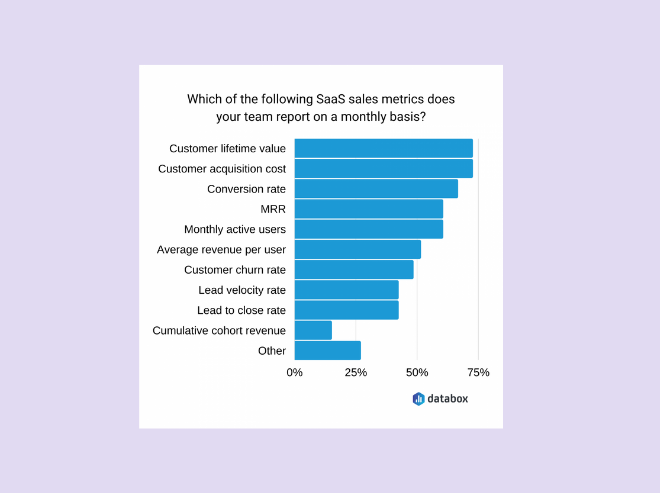
Given below is an overview of the top SaaS sales metrics by Databox.
Now, chances are that you might be tracking a couple or even most of these, but there might be a few which you’d be missing out on.
Some of them include:
Total win rate; which measures the number of leads closed during a given period
Net promoter score; which measures how likely a customer is to recommend your product to another potential user (friends, coworkers or family).
New opportunities added; which analyzes the number of new leads added to the sales pipeline. A drop in numbers here could signal issues with your current marketing and sales efforts.
It’s important to keep track of these numbers to ensure the success of your B2B SaaS sales process, and take required corrective measures.
8. Designing product trials & demos
Free trials and demos are an effective way to showcase the value of your product, and the focus here should be on getting the customer to use your product as quickly as possible.
For free trials, keep the registration process simple with fields like the email address, name and password. Once through, periodically check-in to see if the customer has explored the product and have any questions about it. Now you can have automated prompts inside the product, or simply ask your sales team to connect with the user directly.
Alternately, in demos, the first step is the customer’s request on your website, and then based on the lead qualification approach you’re using, come up with a list of inputs to filter out disqualified prospects.
The bottom-line is, both of these should be designed to demonstrate how your product solves specific problems and improve business processes.
9. Create & train a multi-competency sales team
Once the product trials and demos are designed, you need to establish and train a sales team with multiple competencies. A crucial part of the SaaS sales process, they should be trained to employ tactics that not only increase sales & revenue, but also build long-term relationships.
Here are a few things to consider while building a sales team for your SaaS:
Assess customer needs using a mix of discovery calls, surveys and one-on-one calls & follow-ups
Make note of the above insights and then match them with the features and benefits of your product or service
Based on research in the previous stages, choose between a free trial or product demo to ensure that prospects know about the value of your product,
You can also share playbooks from other companies & provide training as to how they can leverage some of their tactics in your sales process.
10. Establish SOPs
Most successful SaaS sales processes are built using practices that consistently bring in results. As these practices evolve, it’s important to keep yourself async with them and keep things up-to-date.
More often than not, the best place to start is within your sales function, by asking sales reps questions about the following:
Outline of the conversation with a prospective customer
Questions asked by the customer
Resources and content assets used
Case studies & testimonials used
What prompted the customer to purchase?
Was there a record of this data somewhere?
What was the approach at each stage of the buyer’s journey taken by the sales reps?
Based on the data gathered, you’ll observe the approaches taken by the salespeople, with patterns that can then be converted into standard operating procedures (SOPs).
This could include scripts tailored to specific ICPs, questions to ask the prospect and matching them with specific features and how further ahead in the funnel do you want to start offering them free trials and product demos.
You can also set up SOPs for follow-ups, with regular check-ins around general queries, offering assistance and nudging existing users for an upsell or cross-sell.
That being said, the focus should be to humanize the prospect & sales rep’s relationship, while adapting to the evolving needs of your ideal customer.
As a founder, your SaaS sales process should be based on both gut feeling, and hard data; thereby generating the desired results.
11. Test & iterate
Continuously testing and refining your SaaS sales process steps based on performance data and feedback is vital. In this context, regularly testing different aspects of your sales process – from lead generation tactics and sales pitch wording to follow-up frequency – becomes crucial.
For instance, A/B testing can be employed to compare the effectiveness of different sales emails or landing pages, revealing which versions resonate more with your target audience.
In addition to these, feedback from customers and sales team members also provides a rich source of information for refining your approach.
A company might discover, through customer feedback, that a particular feature of their product is highly valued and adjust their sales pitch to highlight this feature more prominently. Feedback from customers and sales team members is another rich source of information.
This process of continual testing and iteration, informed by data and feedback, ensures that your sales process remains agile and aligned with market realities, thereby maximizing the potential for successful outcomes.
Final Thoughts
Building a robust SaaS sales process is a crucial investment for long-term success. It lays the foundation for not only driving immediate sales but also establishing enduring customer relationships.
Incorporating Cleverviral's cold outreach services into your sales strategy can further enhance your outreach.
Our AI-driven, intent-based approach, coupled with dynamic personalization, ensures that your SaaS solution reaches the right audience effectively, thereby boosting your client acquisition efforts.
In case of any inquiries or questions about how we can help, and the next steps needed to get more high-quality leads for your SaaS business, drop us a line on hi@cleverviral.co & we’ll get back to you with more details.
Frequently Asked Questions
What are the stages of a SaaS deal?
The SaaS sales process usually consists of the following 7 stages:
- Finding leads - Reaching out to the leads - Lead qualification - Pitching your product - Addressing objections - Closing the deal - Nurturing new customers & retaining older ones.
What is a SaaS sales strategy?
A SaaS sales strategy is a comprehensive plan that outlines how a Software as a Service (SaaS) company will market and sell its product to potential customers. It includes defining the target market, establishing pricing models, determining sales channels, and developing key messaging and positioning for the product.
How do you generate sales in SaaS?
Generating sales in SaaS involves a multifaceted approach combining strategic marketing, targeted outreach, and a strong emphasis on customer relationships. Key tactics include inbound marketing, cold email, cold calling, attending in-person events and even paid ads.
Product demos & free trials are often used to showcase the software's value, addressing specific customer pain points.
Crucially, sales strategies in SaaS focus on building long-term relationships, with customer success teams playing a vital role in ensuring customer satisfaction and retention.
How long is a SaaS sales cycle?
As per Hubspot, the average sales cycle for a SaaS product is about 84 days. This number, however, can vary based on the annual contract value (ACV) of a given customer.
Free POC
Reading about outbound isn't running it. Want us to run yours?
Apply below. If we're a fit, we run a real pilot on your ICP and show you the actual replies before you commit to anything.